
Platform Transformation Patterns: From Bottleneck to Multiplier
Published: 21st May 2026
By: Benjamin Clark
Document Sections
• Executive Summary
• The Problem
• Case Studies
• Two Core Patterns
• Conclusion
• References
• Appendix A: Data-driven Terraform - Variant B (GitHub Management)
Overview
Infrastructure bottlenecks significantly hinder organisational competitiveness. DORA Research [10] identifies a 1,000-fold disparity in deployment frequency between elite and low-performing organisations. This whitepaper contends that this gap is primarily due to the failure of low performers to treat infrastructure as a first-class software engineering deliverable. Although documented transformation patterns are limited, they are essential. This whitepaper analyses two transformations conducted by Sudoblark: (1) a multi-national enterprise improved from one release every four months to twelve releases per day; (2) a startup launched revenue-generating products within 90 days, starting from no infrastructure.
This analysis identifies two core technical patterns to support organisational transformation: data-driven Terraform and CI/CD at scale. These patterns enable organisations to manage infrastructure changes efficiently and optimise software delivery processes. Both are defined using a Gang of Four (GoF)-style pattern definition structure [5]. The appendix illustrates how data-driven Terraform can simplify the management of users and teams within a GitHub Organisation.
Figures
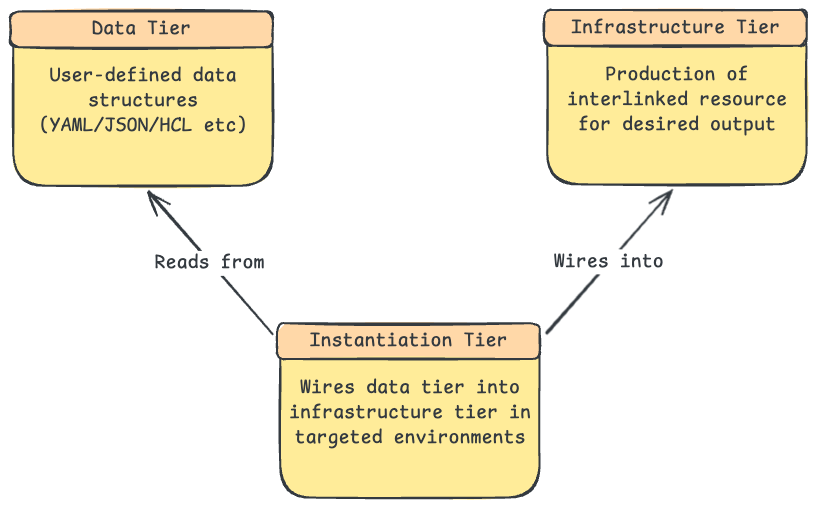
Figure 1: Three-Tier Terraform Pattern
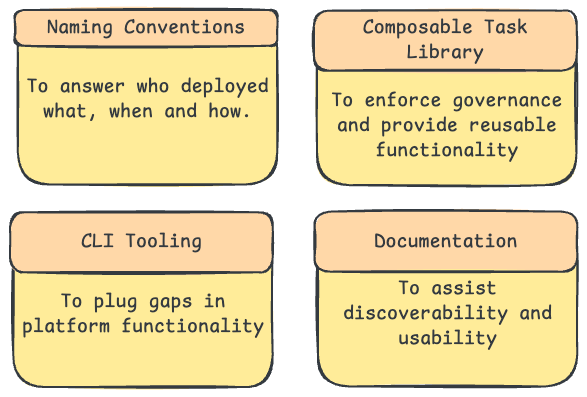
Figure 2: The four components of CI/CD at scale
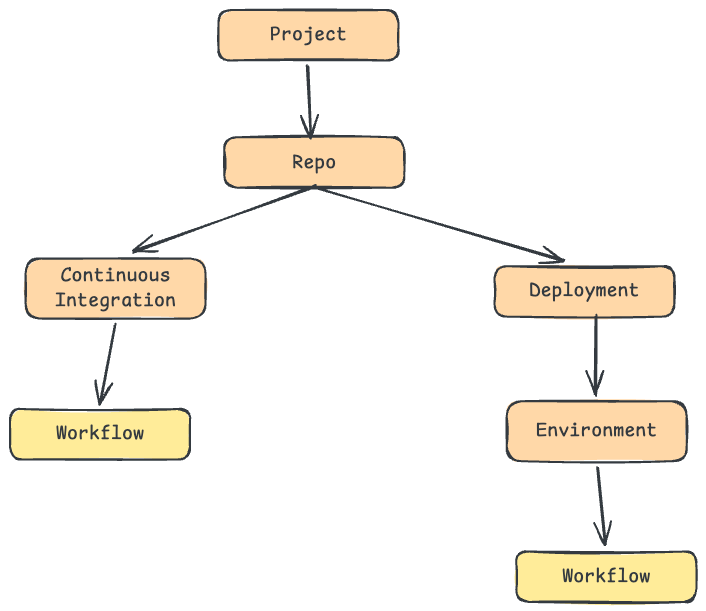
Figure 3: Workflows organised into a project, repository, type, and environment naming hierarchy for repositories with clean separation of concerns
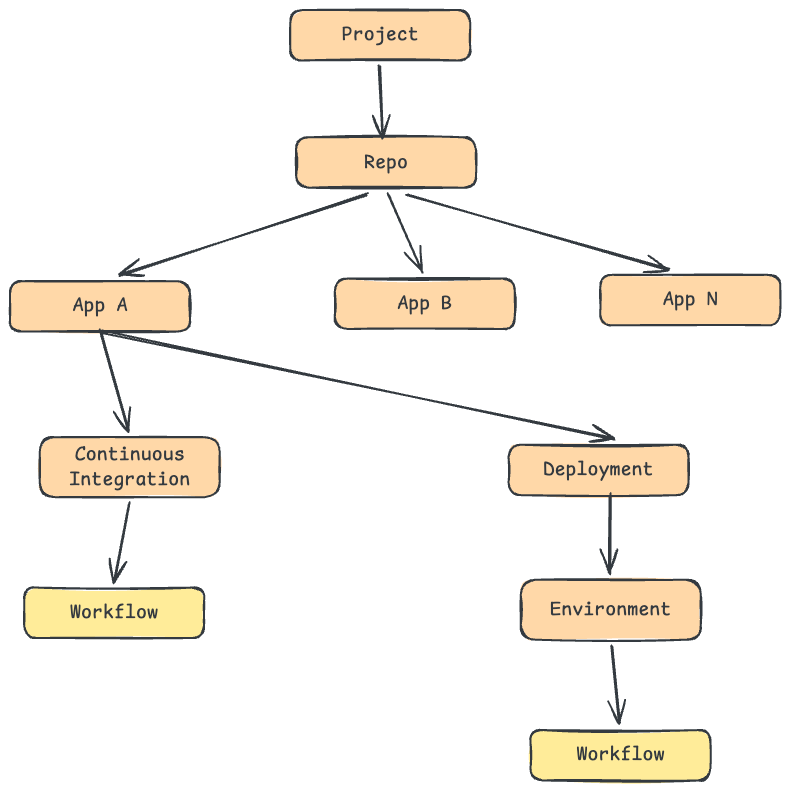
Figure 4: Workflows organised into a project, repository, app, type, and environment naming hierarchy for repositories with mixed separation of concerns

Figure 5: Integration of internal CLI tooling into composable task library
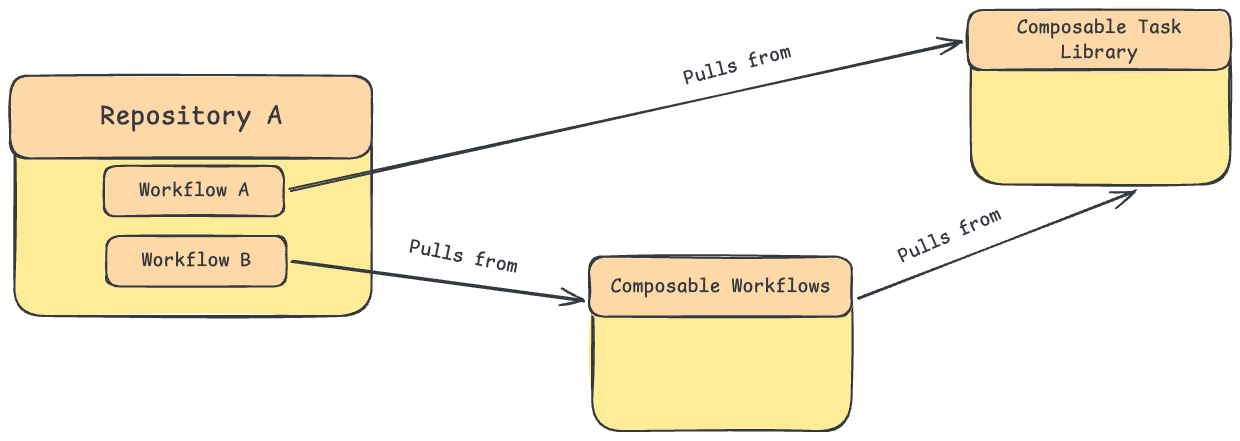
Figure 6: Composable Library Variant A - a pull model for workflows
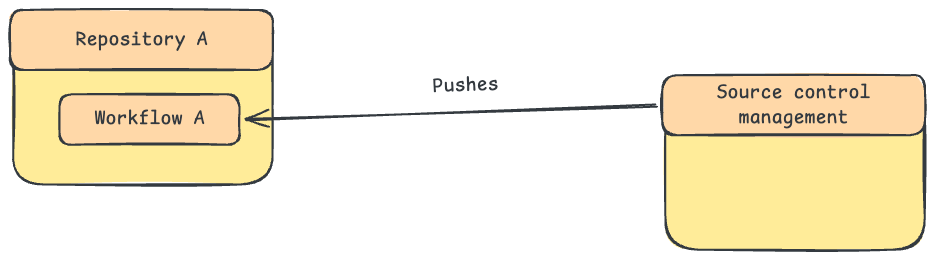
Figure 7: Composable Library Variant B - a push model for workflows
References
[1]
Beck, K., et al. (2001). Manifesto for Agile Software Development. https://agilemanifesto.org/
[2]
Poppendieck, M., & Poppendieck, T. (2003). Lean Software Development: An Agile Toolkit. Addison-Wesley Professional.
[3]
Allspaw, J., & Hammond, P. (2009). 10+ Deploys Per Day: Dev and Ops Cooperation at Flickr. O'Reilly Velocity Conference.
[4]
McGraw, G., et al. (2010). Rugged Software Manifesto. https://ruggedsoftware.org/
[5]
Gamma, E., Helm, R., Johnson, R., & Vlissides, J. (1994). Design Patterns: Elements of Reusable Object-Oriented Software. Addison-Wesley Professional.
[6]
Foote, B., & Yoder, J. (1997). Big Ball of Mud. In Pattern Languages of Program Design (Vol. 4).
[7]
Kim, G., Behr, K., & Spafford, G. (2013). The Phoenix Project: A Novel About IT, DevOps, and Helping Your Business Win. IT Revolution Press.
[8]
Spotify Engineering. (2014). Spotify Engineering Culture - Part 1. https://engineering.atspotify.com/2014/03/spotify-engineering-culture-part-1
[9]
Skelton, M., & Pais, M. (2019). Team Topologies: Organising Business and Technology Teams for Fast Flow. IT Revolution Press.
[10]
Forsgren, N., Humble, J., Kim, G., & Adkins, J. (2023). Accelerate: State of DevOps Report 2023. Google Cloud & IT Revolution Press.
[11]
Parnas, D. L. (1994). Software Aging. In Proceedings of the 16th International Conference on Software Engineering.
[12]
Beck, K. (1999). Extreme Programming Explained: Embrace Change. Addison-Wesley Professional.
[13]
Forsgren, N., Storey, M.-A., Maddila, C., Zimmermann, T., Houck, B., & Butler, J. (2021). The SPACE of Developer Productivity. ACM Queue, Vol. 19, No. 1.
[14]
Hashicorp. (2024). GitHub Terraform Provider Documentation. https://registry.terraform.io/providers/integrations/github/latest/docs
Want these patterns in your platform?
I've used them to take an enterprise from one release every four months to twelve a day, and a startup with no infrastructure to revenue in 90 days.